BIOINSIGHTS CASE STUDY
Streamlined Functional Medicine Practice
For Providers At Scale
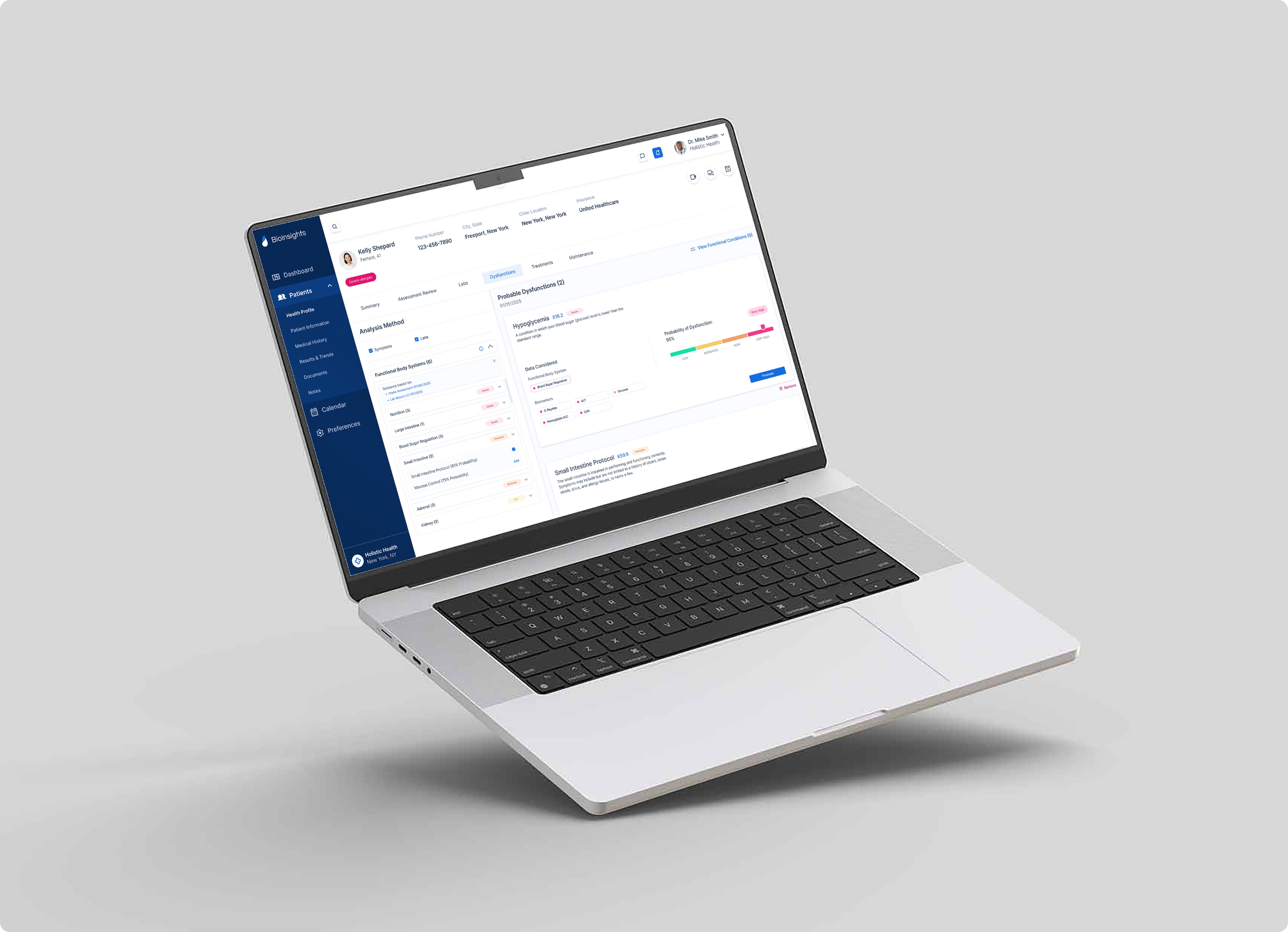
Unifies healthcare providers’ workflow into one streamlined web-based platform with a guided experience to confidently deliver personalized high-quality root-cause care.
BIOINSIGHTS CASE STUDY
BIOINSIGHTS CASE STUDY
Streamlining Functional Medicine
For Providers At Scale
Streamlined Functional Medicine Practice
For Providers At Scale
Streamlined Functional Medicine Practice For Providers At Scale
Unifies healthcare providers’ workflow into one streamlined web-based platform with a guided experience to confidently deliver personalized high-quality root-cause care.
Unifies healthcare providers’ workflow into one streamlined web-based platform with a guided experience to confidently deliver personalized high-quality root-cause care.
Unifies healthcare providers’ workflow into one streamlined web-based platform with a guided experience to confidently deliver personalized high-quality root-cause care.

OVERVIEW
Context, Role, & Design Scope
Context, Role, & Design Scope
Context, Role, & Design Scope
About The Product
About The Product
About The Product
Bioinsights is a web-based platform that simplifies complex health data into clear, actionable insights for functional medicine providers to deliver confident care and improve patient outcomes, while making root-cause care more accessible to all.
Bioinsights is a web-based platform that simplifies complex health data into clear, actionable insights for functional medicine providers to deliver confident care and improve patient outcomes, while making root-cause care more accessible to all.
The Company
The Company
The Company
Bioinsights | Med-Tech Startup (B2B2C)
Bioinsights | Med-Tech Startup (B2B2C)
Empowers healthcare providers with the tools, insights, and resources to confidently practice functional medicine at scale, through the use of a single, all-in-one platform.
Empowers healthcare providers with the tools, insights, and resources to confidently practice functional medicine at scale, through the use of a single, all-in-one platform.
Role & Responsibilities
Role & Responsibilities
Role & Responsibilities
Sole Product Designer
Sole Product Designer
Led design from concept to launch, partnering with leadership, internal teams & providers to shape a product grounded in real clinical workflows and built for impact from day one.
Led design from concept to launch, partnering with leadership, internal teams & providers to shape a product grounded in real clinical workflows and built for impact from day one.
Duration
Duration
Duration
0 -> 1 Phase
0 -> 1 Phase
0 -> 1 Phase
1.5 years from concept to 1st release
1.5 years from concept to 1st release
1.5 years from concept to 1st release
Tools
Tools
Tools
Figjam
Figjam
Figma
Figma
Jira
Jira
Deliverables
Deliverables
Deliverables
Competitive Analysis
Competitive Analysis
User Flows
User Flows
Site Map
Site Map
Lean Style Guide
Lean Style Guide
Wireframes
Wireframes
Hi-Fi Prototypes
Hi-Fi Prototypes
Sprint Plans & Roadmaps
Sprint Plans & Roadmaps
Sprint Requirements
Sprint Requirements
THE CHALLENGE
THE CHALLENGE
THE CHALLENGE
Complexity and tool fragmentation is limiting potential.
Complexity and tool fragmentation is limiting potential.
Complexity and tool fragmentation is limiting potential.
THE SOLUTION
THE SOLUTION
THE SOLUTION
All-in-one platform to practice root-cause care at scale.
All-in-one platform to practice root-cause care at scale.
All-in-one platform to practice root-cause care at scale.

RESEARCH & DISCOVERY
Identified Gaps Across Users & Tools
Identified Gaps Across Users & Tools
Identified Gaps Across Users & Tools
Competitive Analysis
Competitive Analysis
Competitive Analysis
Findings
Findings
Findings
We first analyzed the functional and preventative medicine landscape, looking at 3 platforms to learn how they assisted providers and patients.
We first analyzed the functional and preventative medicine landscape, looking at 3 platforms to learn how they assisted providers and patients.

Viome
Viome
Viome
Consumer-focused; no provider platform.
Consumer-focused; no provider platform.
Lacks workflow integration for clinicians.
Lacks workflow integration for clinicians.
Offers insights, not actionable care tools.
Offers insights, not actionable care tools.
No bridge from data → diagnosis → treatment.
No bridge from data → diagnosis → treatment.

Rupa Health
Rupa Health
Rupa Health
Lab-ordering tool, not a full provider platform.
Lab-ordering tool, not a full provider platform.
Providers still rely on multiple systems for care delivery.
Providers still rely on multiple systems for care delivery.
No built-in treatment, telehealth, or patient education.
No built-in treatment, telehealth, or patient education.

Function Health
Function Health
Function Health
Direct-to-consumer; excludes providers.
Direct-to-consumer; excludes providers.
No workflow or care coordination tools.
No workflow or care coordination tools.
Offers insights without guided clinical action.
Offers insights without guided clinical action.
Opportunities
Opportunities
Opportunities
We found that there is no one-in-all platform. Most platforms are either focused on limited provider tools or are more focused on the consumer market. Very few platforms bridge that gap to provide value and support to both providers and patients. This makes it difficult for providers to deliver consistent, high-quality care effectively, and more challenging for patients to get the support they need.
We found that there is no one-in-all platform. Most platforms are either focused on limited provider tools or are more focused on the consumer market. Very few platforms bridge that gap to provide value and support to both providers and patients. This makes it difficult for providers to deliver consistent, high-quality care effectively, and more challenging for patients to get the support they need.
Bioinsights
Bioinsights
Bioinsights
All-in-one platform integrating every stage of patient care.
All-in-one platform integrating every stage of patient care.
Built-in clinical intelligence connecting biomarkers, dysfunctions, and systems.
Built-in clinical intelligence connecting biomarkers, dysfunctions, and systems.
Workflow-first design that mirrors real provider processes.
Workflow-first design that mirrors real provider processes.
Integrated patient education to boost understanding and adherence.
Integrated patient education to boost understanding and adherence.
Scalable system to grow easily with clinics, providers, and new features.
Scalable system to grow easily with clinics, providers, and new features.
User & Stakeholder Interviews
User & Stakeholder Interviews
User & Stakeholder Interviews
Research Approach
Research Approach
Research Approach
We partnered closely with an experienced functional medicine provider and her clinic to gain real insights and better understand their workflows, processes, and frustrations. We held multiple calls to discuss alignment between our initial findings and assumptions, and their real-world perspectives about where they see opportunity for improvement within their daily workflows.
We partnered closely with an experienced functional medicine provider and her clinic to gain real insights and better understand their workflows, processes, and frustrations. We held multiple calls to discuss alignment between our initial findings and assumptions, and their real-world perspectives about where they see opportunity for improvement within their daily workflows.
These calls allowed us to ground our previous findings in real user input to understand that the core issue for many clinics was inefficient processes due to reliance on fragmented tools - hurting not just their effectiveness, but their patients’ experiences working with them.
These calls allowed us to ground our previous findings in real user input to understand that the core issue for many clinics was inefficient processes due to reliance on fragmented tools - hurting not just their effectiveness, but their patients’ experiences working with them.
Key Pain Points
Key Pain Points
Key Pain Points
Multiple tools create complexity, cause increased errors, and lost time.
Multiple tools create complexity, cause increased errors, and lost time.
Manual documentation is error-prone, increases inaccuracy, and reduces focus on patients.
Manual documentation is error-prone, increases inaccuracy, and reduces focus on patients.
Lack of built-in guidance and resources forces reliance on additional external tools for insights and data interpretation.
Lack of built-in guidance and resources forces reliance on additional external tools for insights and data interpretation.
Lack of educational material leads to patient isolation, reduced trust, and understanding.
Lack of educational material leads to patient isolation, reduced trust, and understanding.
10+
10+
Flows Mapped
Flows Mapped
80+
80+
Screens Designed
Screens Designed
15+
15+
Features Built
Features Built

GOAL DEFINITION
Defined Direction Through Constraints
Defined Direction Through Constraints
Defined Direction Through Constraints
Constraints
Constraints
Constraints
As an early-stage startup, we had to work through our share of constraints. Because of these we needed to ensure each decision we made drove the product forward. To accomplish this, we needed to prioritize ruthlessly, making sure to deliver meaningful impact from day one.
As an early-stage startup, we had to work through our share of constraints. Because of these we needed to ensure each decision we made drove the product forward. To accomplish this, we needed to prioritize ruthlessly, making sure to deliver meaningful impact from day one.

A Lean Team
A Lean Team
A Lean Team
A lean team required close alignment and quick execution.
A lean team required close alignment and quick execution.

Limited Resources
Limited Resources
Limited Resources
Limited available resources kept us focused on high-impact decisions that drove value.
Limited available resources kept us focused on high-impact decisions that drove value.

Tight Timeline
Tight Timeline
Tight Timeline
A tight timeline demanded clear, purposeful decisions with intent.
A tight timeline demanded clear, purposeful decisions with intent.
How Might We…
How Might We…
How Might We…
We identified 4 “How Might We…” questions that spoke to the core challenges we needed to solve based on our research, and consistently revisited them to ensure we kept our decisions grounded and aligned with user needs and our identified solution.
We identified 4 “How Might We…” questions that spoke to the core challenges we needed to solve based on our research, and consistently revisited them to ensure we kept our decisions grounded and aligned with user needs and our identified solution.
How Might We…remove friction points from their daily workflows?
How Might We…remove friction points from their daily workflows?
How Might We…lower the learning curve for new functional medicine providers?
How Might We…lower the learning curve for new functional medicine providers?
How Might We…remove the complexity & frustration of having to rely on & manage multiple tools & systems?
How Might We…remove the complexity & frustration of having to rely on & manage multiple tools & systems?
How Might We…ensure the platform can support a clinic as their needs and patient base grow?
How Might We…ensure the platform can support a clinic as their needs and patient base grow?
Key Design Principles
Key Design Principles
Key Design Principles
I established a set of 5 core design principles to help focus on designing with intention throughout the process. These principles ensured the platform was being designed to support and solve current user frustrations, keeping it from becoming another fragmented tool in their workflows.
I established a set of 5 core design principles to help focus on designing with intention throughout the process. These principles ensured the platform was being designed to support and solve current user frustrations, keeping it from becoming another fragmented tool in their workflows.

Clear, Linear, Guided Workflow
Clear, Linear, Guided Workflow
Clear, Linear, Guided Workflow
Mirror the provider–patient journey through a step-by-step flow that reduces cognitive load and unnecessary navigation.
Mirror the provider–patient journey through a step-by-step flow that reduces cognitive load and unnecessary navigation.
Mirror the provider–patient journey through a step-by-step flow that reduces cognitive load and unnecessary navigation.
Reduced Visual Noise
Reduced Visual Noise
Reduced Visual Noise
Surface only essential information at each step, keeping supporting details easily accessible without navigating away from the screen and disrupting the current task.
Surface only essential information at each step, keeping supporting details easily accessible without navigating away from the screen and disrupting the current task.
Surface only essential information at each step, keeping supporting details easily accessible without navigating away from the screen and disrupting the current task.

Unified System
Unified System
Unified System
Replace fragmented tools with a single, cohesive platform that supports the full care workflow from intake to follow-up.
Replace fragmented tools with a single, cohesive platform that supports the full care workflow from intake to follow-up.
Replace fragmented tools with a single, cohesive platform that supports the full care workflow from intake to follow-up.

Familiar, Intuitive Interface
Familiar, Intuitive Interface
Familiar, Intuitive Interface
Leverage simple, recognizable patterns to reduce learning curves and enable confident adoption from the first use.
Leverage simple, recognizable patterns to reduce learning curves and enable confident adoption from the first use.
Leverage simple, recognizable patterns to reduce learning curves and enable confident adoption from the first use.
Embedded Clinical Guidance
Embedded Clinical Guidance
Embedded Clinical Guidance
Integrate data-backed insights, education, and decision support into the workflow to guide providers and boost understanding.
Integrate data-backed insights, education, and decision support into the workflow to guide providers and boost understanding.
Integrate data-backed insights, education, and decision support into the workflow to guide providers and boost understanding.

CORE EXPERIENCE ALIGNMENT
Aligned To Real User Workflows
Aligned To Real User Workflows
Aligned To Real User Workflows
Core Workflow
Core Workflow
Core Workflow
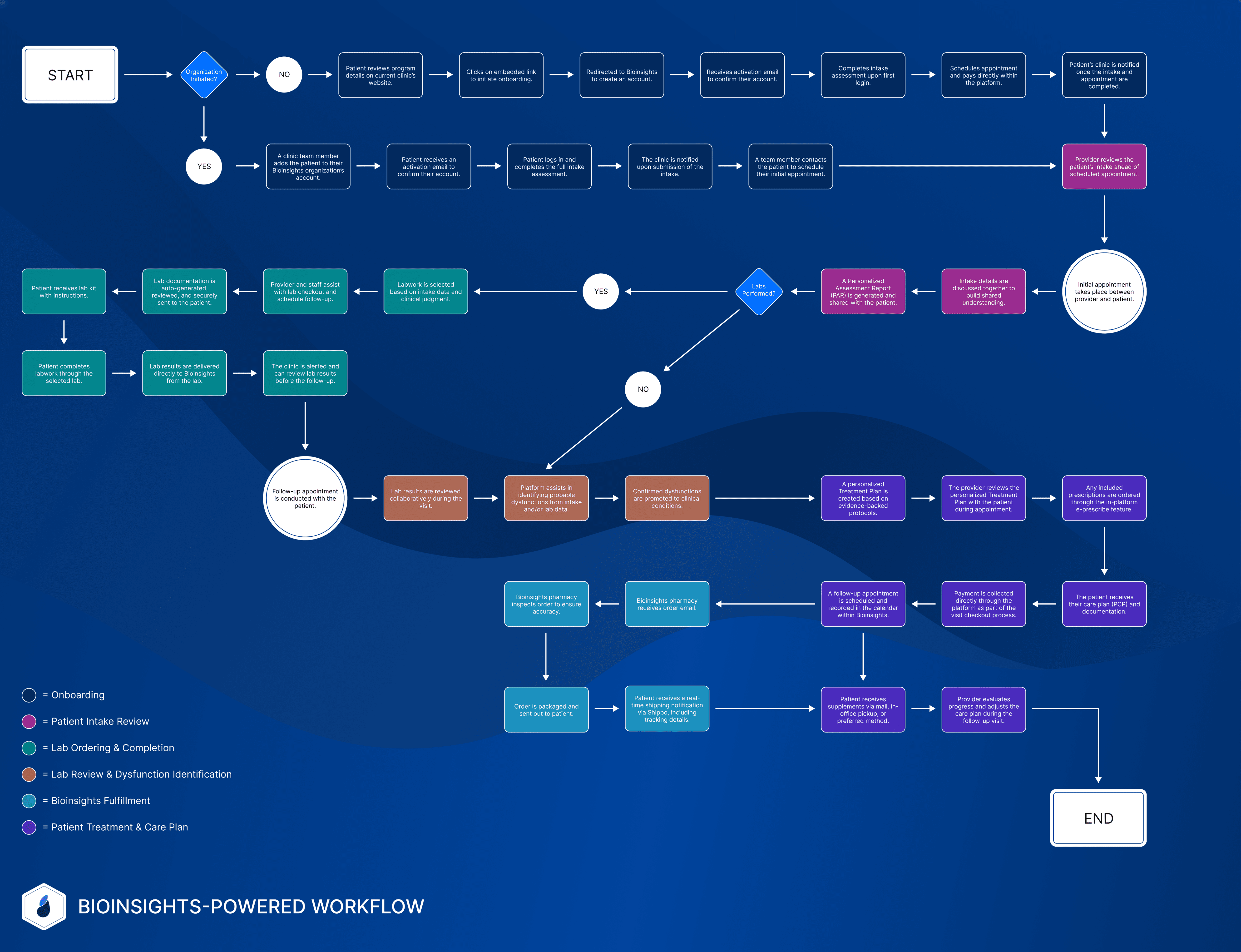
Our MVP platform was defined to mirror the most critical and frequently used steps in functional medicine clinics - the core patient-provider workflow. This workflow was identified based on our understanding of team constraints, combined with the need to build a product that provided the most value from day one - validated by our partner clinic.
Our MVP platform was defined to mirror the most critical and frequently used steps in functional medicine clinics - the core patient-provider workflow. This workflow was identified based on our understanding of team constraints, combined with the need to build a product that provided the most value from day one - validated by our partner clinic.
01
01
Patient Intake
Patient Intake
02
02
Consultation
Consultation
03
03
Lab Selection
Lab Selection
04
04
Lab Review
Lab Review
05
05
Dysfunctions
Dysfunctions
06
06
Treatment Plan
Treatment Plan
07
07
Fulfillment
Fulfillment
08
08
Patient Follow Up
Patient Follow Up

DESIGN
Designed With Clear, Practical Intent
Designed With Clear, Practical Intent
Designed With Clear, Practical Intent
Designing For Clarity, Guidance, & Support
Designing For Clarity, Guidance, & Support
Designing For Clarity, Guidance, & Support
Building upon the established design principles, I focused on designing the platform in ways that relieved users’ identified pain points and established a more guided, supported experience.
Building upon the established design principles, I focused on designing the platform in ways that relieved users’ identified pain points and established a more guided, supported experience.
Key decisions included:
Key decisions included:
Key decisions included:
Patient-Centered Navigation
Patient-Centered Navigation
All workflows were anchored around the patient, eliminating the need to search and navigate across the platform.
All workflows were anchored around the patient, eliminating the need to search and navigate across the platform.
All workflows were anchored around the patient, eliminating the need to search and navigate across the platform.
Linear Workflow Structure
Linear Workflow Structure
The experience mirrors the real clinical process, guiding providers step-by-step and reducing cognitive load.
The experience mirrors the real clinical process, guiding providers step-by-step and reducing cognitive load.
The experience mirrors the real clinical process, guiding providers step-by-step and reducing cognitive load.
Consistent Access To Context
Consistent Access To Context
Critical information (labs, history, notes) is always accessible without leaving the current task.
Critical information (labs, history, notes) is always accessible without leaving the current task.
Critical information (labs, history, notes) is always accessible without leaving the current task.
Embedded Guidance
Embedded Guidance
Data-backed insights and educational context are integrated on-screen, directly into the workflow to support decision-making.
Data-backed insights and educational context are integrated on-screen, directly into the workflow to support decision-making.
Data-backed insights and educational context are integrated on-screen, directly into the workflow to support decision-making.
Structured Layout System
Structured Layout System
A consistent 3-column layout organizes input, workspace, and output—creating clarity and continuity across complex steps.
A consistent 3-column layout organizes input, workspace, and output—creating clarity and continuity across complex steps.
A consistent 3-column layout organizes input, workspace, and output—creating clarity and continuity across complex steps.
Lean Style Guide
Lean Style Guide
Lean Style Guide
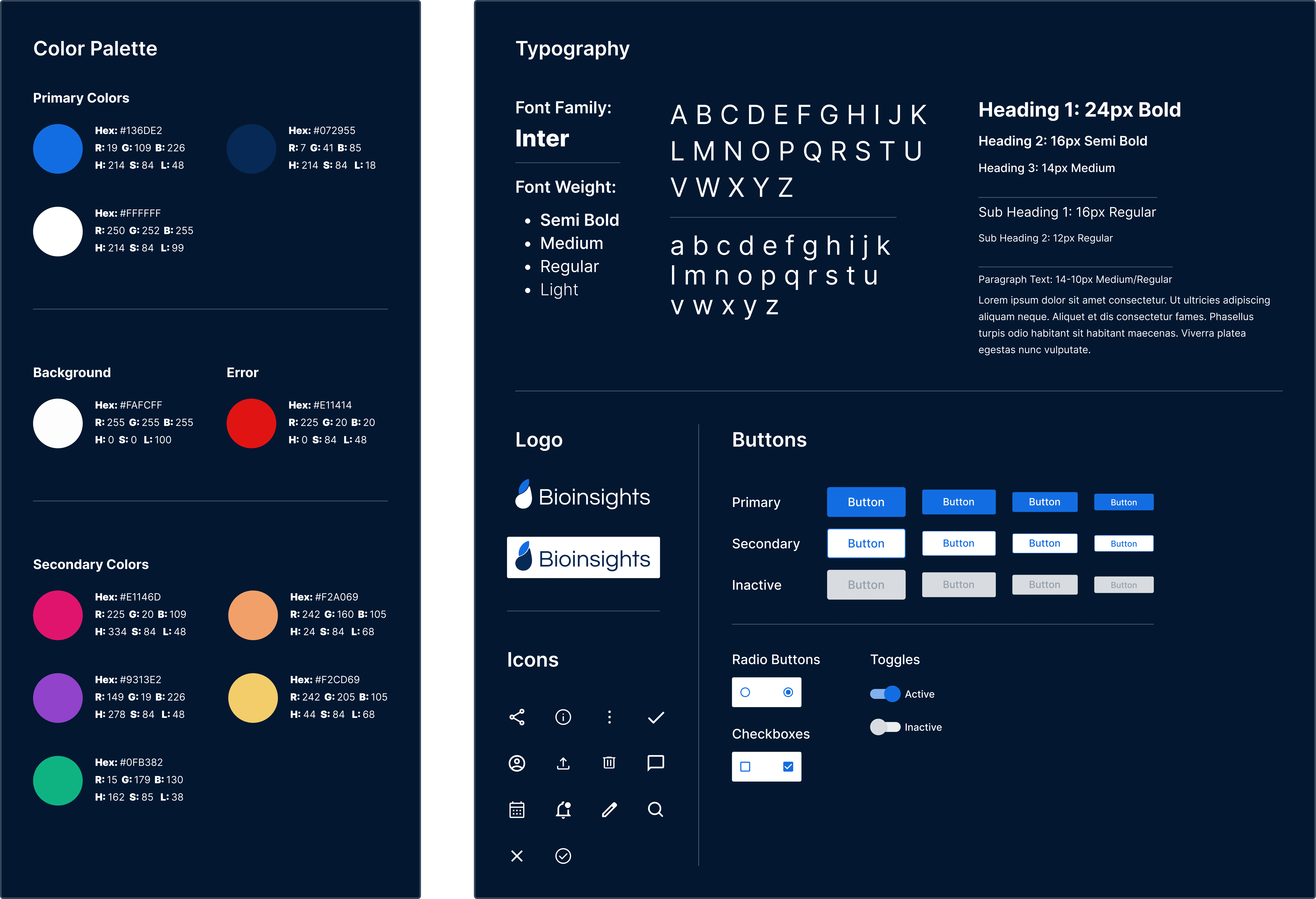
Due to limited resources, I developed a lean style guide to serve as the foundation for a future design system. The guide provided engineers with a structure, framework, and visual identity to assist rapid development.
Due to limited resources, I developed a lean style guide to serve as the foundation for a future design system. The guide provided engineers with a structure, framework, and visual identity to assist rapid development.
The visual direction emphasized clarity and familiarity through minimalism, intentional color usage, and hierarchy to direct the user’s focus, while reducing visual noise. It removed unnecessary complexity and lowered cognitive load.
The visual direction emphasized clarity and familiarity through minimalism, intentional color usage, and hierarchy to direct the user’s focus, while reducing visual noise. It removed unnecessary complexity and lowered cognitive load.
I chose to use visual elements sparingly and strategically to support users through the platform’s data and content-heavy experience.
I chose to use visual elements sparingly and strategically to support users through the platform’s data and content-heavy experience.

FEEDBACK, ITERATION, & VALIDATION
Refined Through Real User Feedback
Refined Through Real User Feedback
Refined Through Real User Feedback
Feedback & Iterations
Feedback & Iterations
Feedback & Iterations
Throughout the design process, we held live feedback sessions with our partner clinic to walk through specific sections and features of the platform. During these calls, we focused on collecting feedback regarding design direction, while testing the effectiveness and efficiency of workflows based on the clinic’s processes. Although we generally received positive feedback, there were opportunities identified to enhance workflow efficiency.
Throughout the design process, we held live feedback sessions with our partner clinic to walk through specific sections and features of the platform. During these calls, we focused on collecting feedback regarding design direction, while testing the effectiveness and efficiency of workflows based on the clinic’s processes. Although we generally received positive feedback, there were opportunities identified to enhance workflow efficiency.
Treatment Plan Customization
Treatment Plan Customization
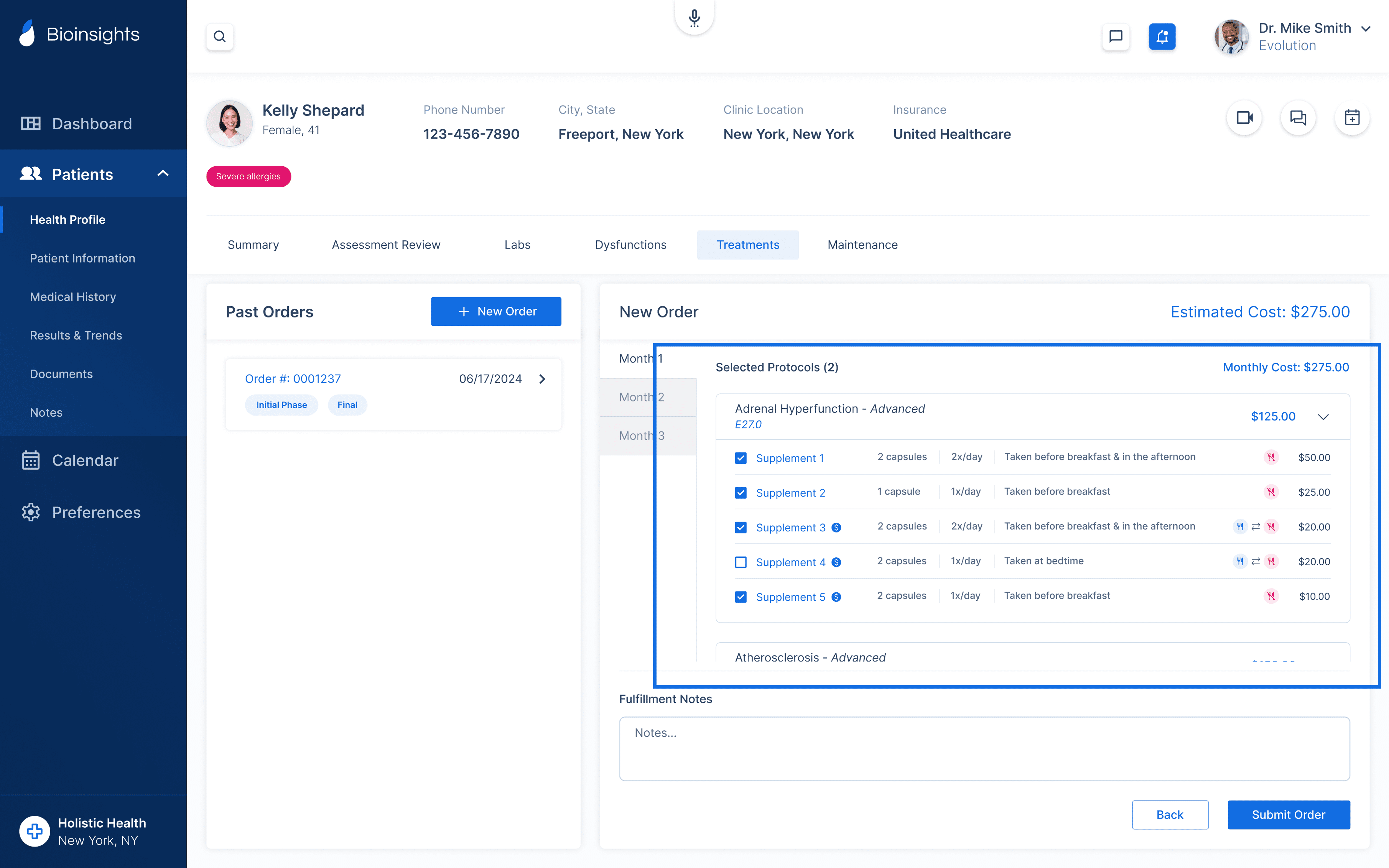
The treatment creation flow was broken down into multiple steps to increase on-screen space, and enhance visibility of key treatment details and customization options while maintaining clear navigation between steps.
The treatment creation flow was broken down into multiple steps to increase on-screen space, and enhance visibility of key treatment details and customization options while maintaining clear navigation between steps.
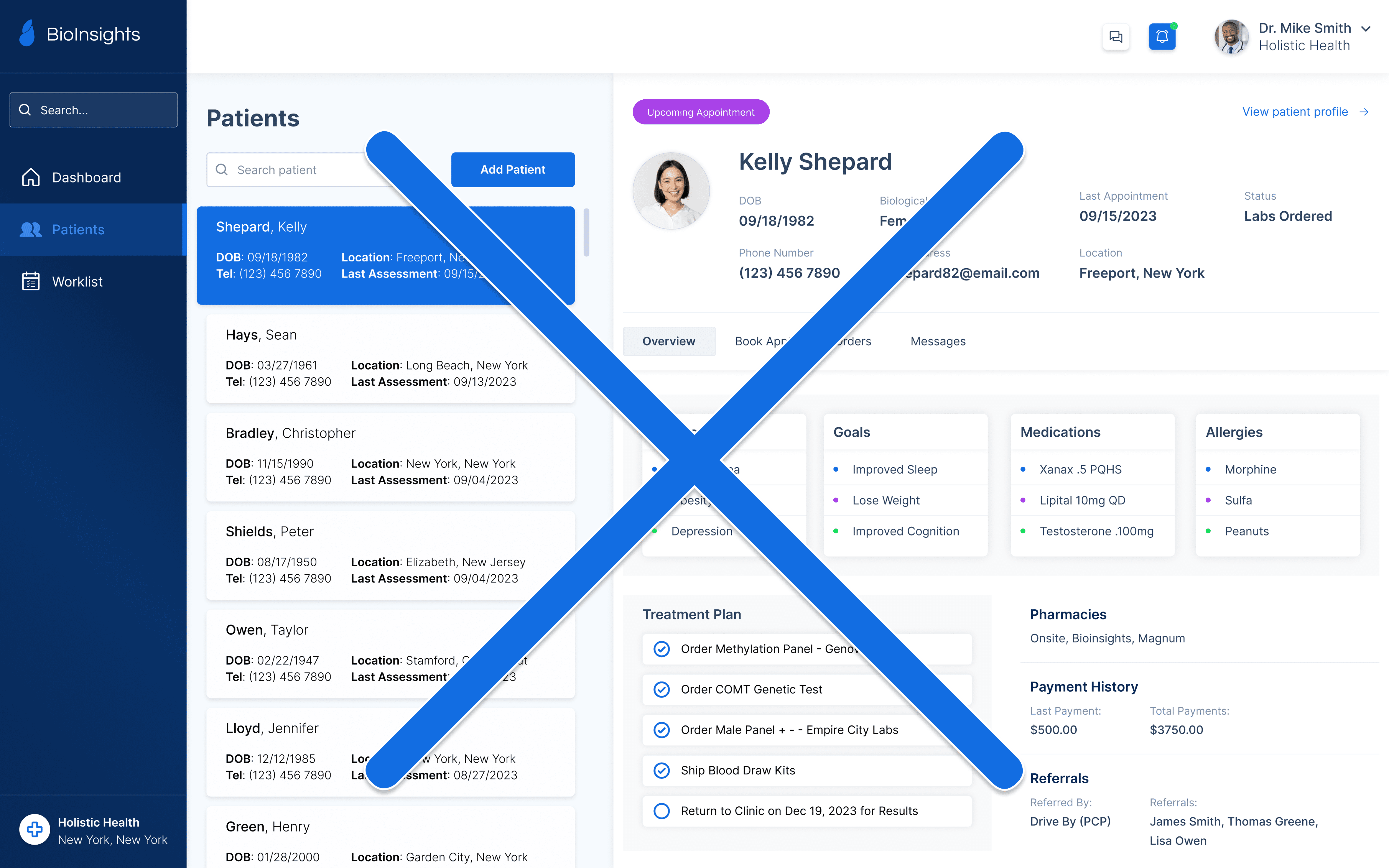
Patient "Preview" Removal
Patient "Preview" Removal
The patient list and patient profiles were separated in two distinct sections within the platform, allowing for increased space and visibility of patient information, while maintaining easy access to patient-specific actions.
The patient list and patient profiles were separated in two distinct sections within the platform, allowing for increased space and visibility of patient information, while maintaining easy access to patient-specific actions.
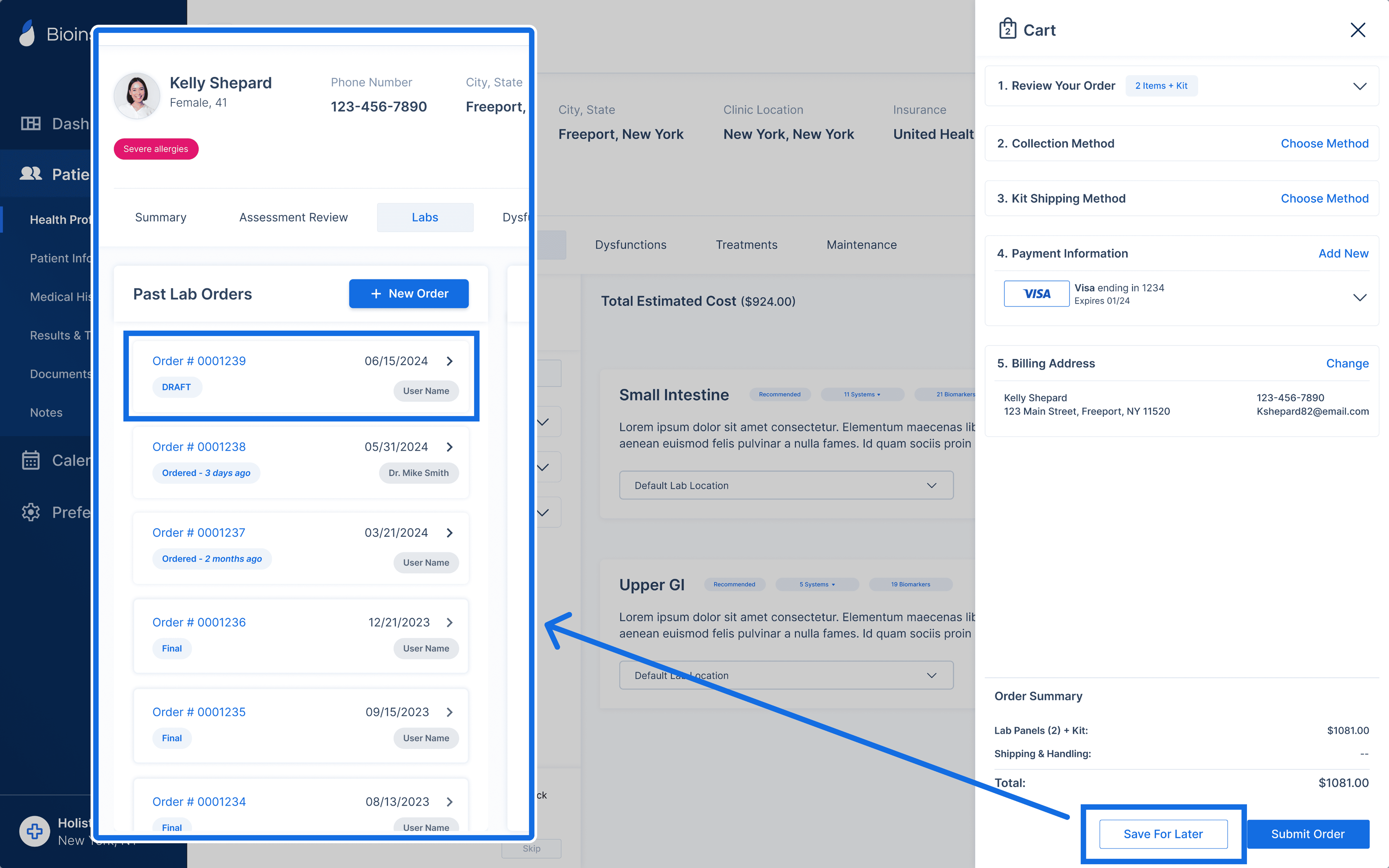
Save For Later Workflow
Save For Later Workflow
This workflow introduced the ability for users to save patient work, allowing them to navigate away from the screen to perform additional tasks. Saved as “Draft”, any user would be able return at a later time to complete the action.
This workflow introduced the ability for users to save patient work, allowing them to navigate away from the screen to perform additional tasks. Saved as “Draft”, any user would be able return at a later time to complete the action.
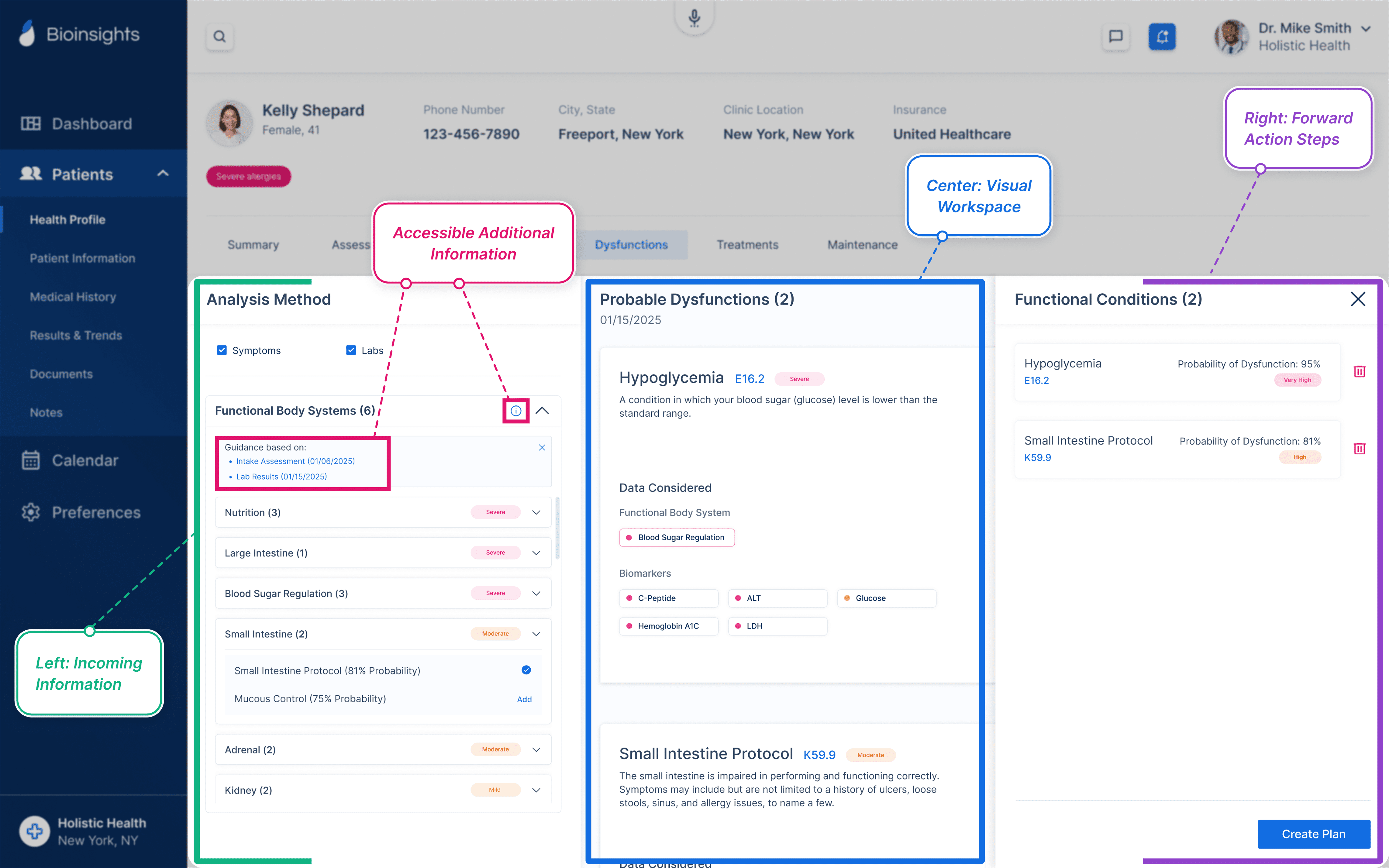
Enhanced Workflow Consistency
Enhanced Workflow Consistency
A 3-column layout was identified, creating consistency between screen structure, defining clear sections for incoming data, workspace to review information, and outgoing data to drive the next phase of a patient’s care.
A 3-column layout was identified, creating consistency between screen structure, defining clear sections for incoming data, workspace to review information, and outgoing data to drive the next phase of a patient’s care.

FINAL MVP PLATFORM
A Complete, Guided Care Experience
A Complete, Guided Care Experience
A Complete, Guided Care Experience
MVP Flow
MVP Flow
MVP Flow
The final MVP delivers a streamlined, supportive, guided experience across the full care journey:
The final MVP delivers a streamlined, supportive, guided experience across the full care journey:
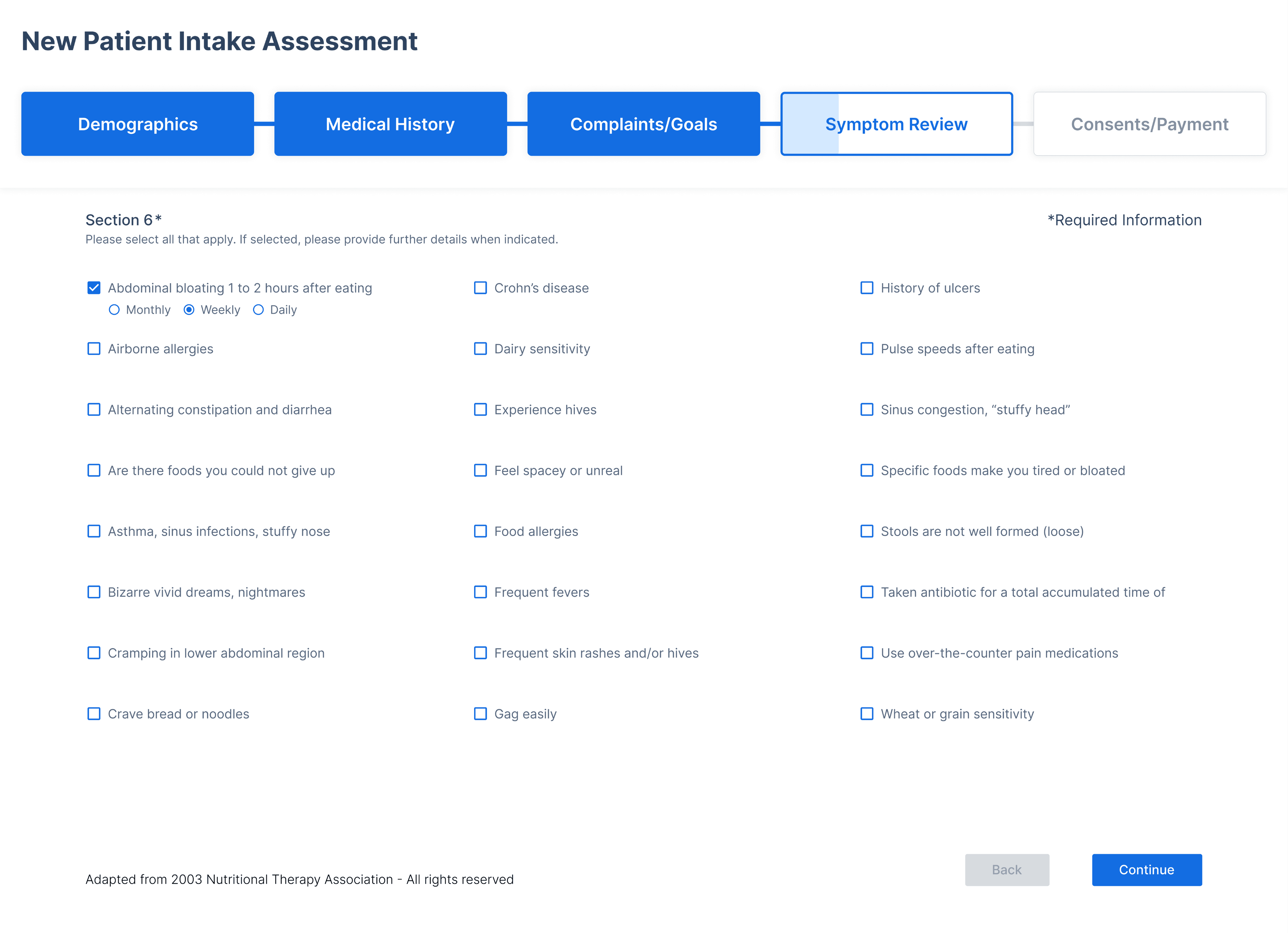
Patient Assessment
Patient Assessment
A structured intake and questionnaire captures patient symptoms and medical history, scoring 20+ body systems by severity to reveal where focused care is needed for the patient.
A structured intake and questionnaire captures patient symptoms and medical history, scoring 20+ body systems by severity to reveal where focused care is needed for the patient.
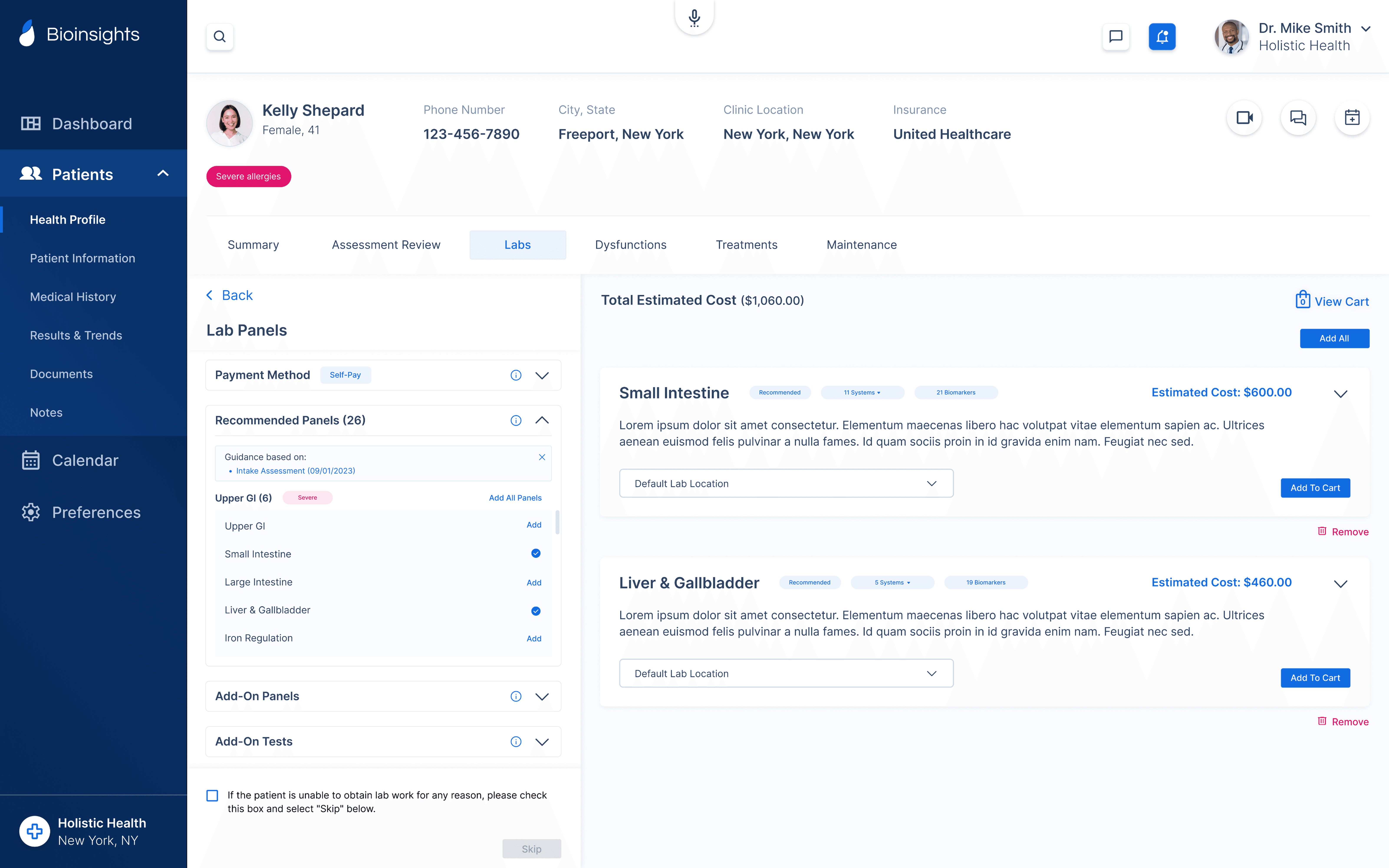
Biomarker Analysis
Biomarker Analysis
Lab recommendations are guided by intake scoring and system severity pulled from patient data, removing guesswork for providers, while also giving them full control to order and adjust tests as needed.
Lab recommendations are guided by intake scoring and system severity pulled from patient data, removing guesswork for providers, while also giving them full control to order and adjust tests as needed.
Patient Analysis
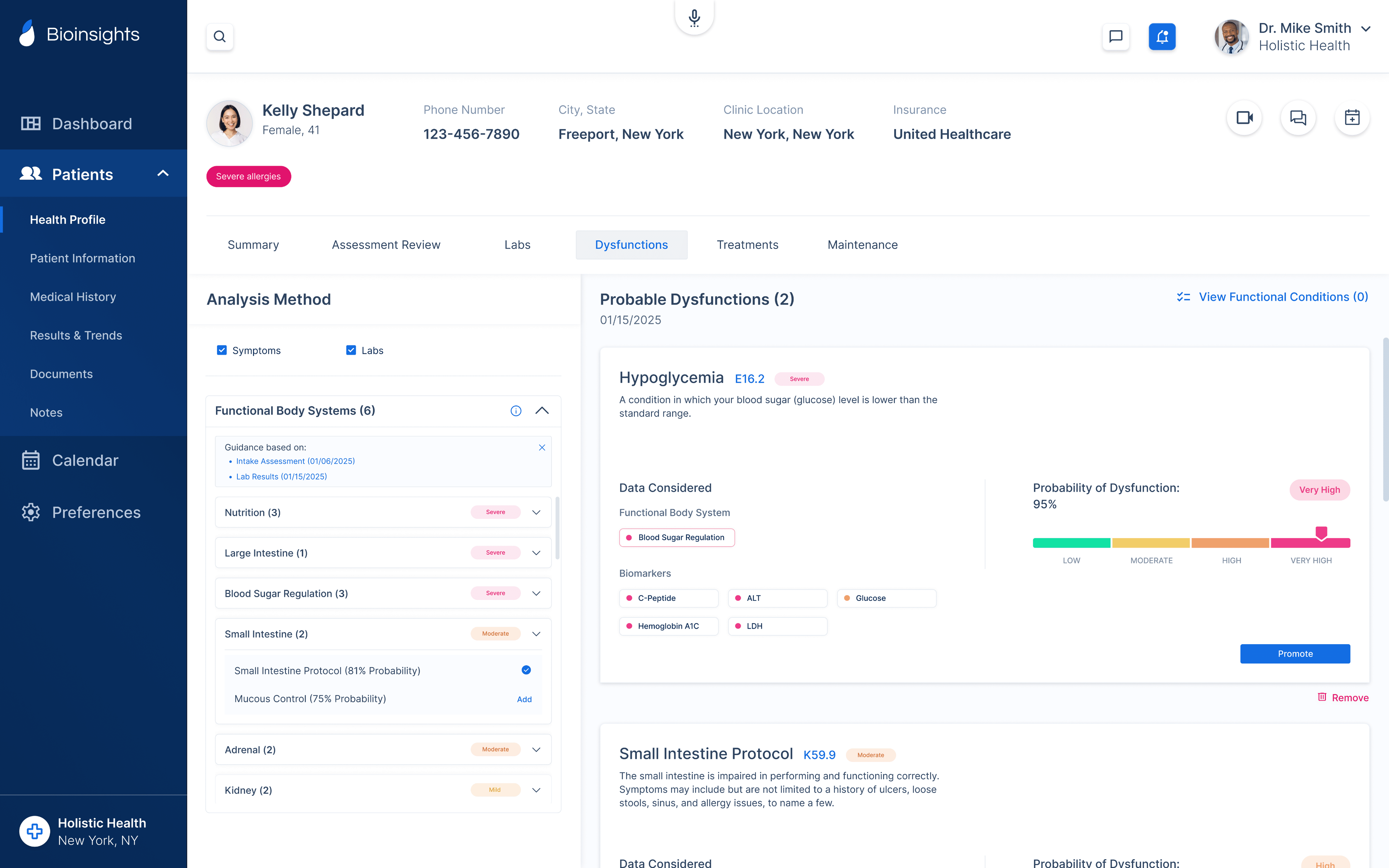
Patient Analysis
Assessment and/or lab data surface the most probable dysfunctions to guide treatment. Screens provide clear clinical context—dysfunction likelihood, severity, related systems, and key biomarkers—to support treatment direction without tool switching.
Assessment and/or lab data surface the most probable dysfunctions to guide treatment. Screens provide clear clinical context—dysfunction likelihood, severity, related systems, and key biomarkers—to support treatment direction without tool switching.
Treatment Protocols
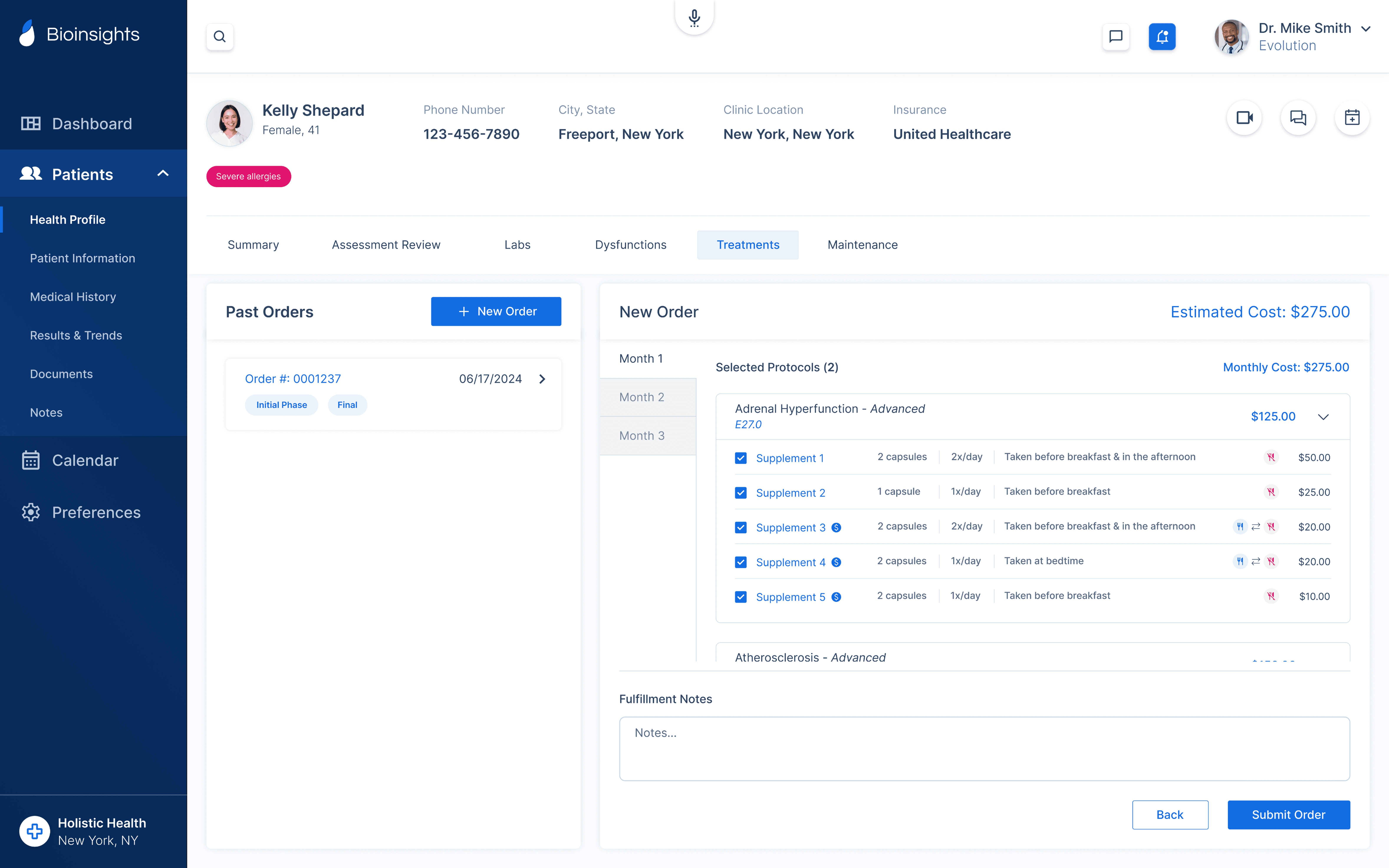
Treatment Protocols
Over 200 evidence-based protocols turn dysfunction insights into customizable, personalized treatment plans that providers can refine instantly for individual patient needs.
Over 200 evidence-based protocols turn dysfunction insights into customizable, personalized treatment plans that providers can refine instantly for individual patient needs.
Fulfillment
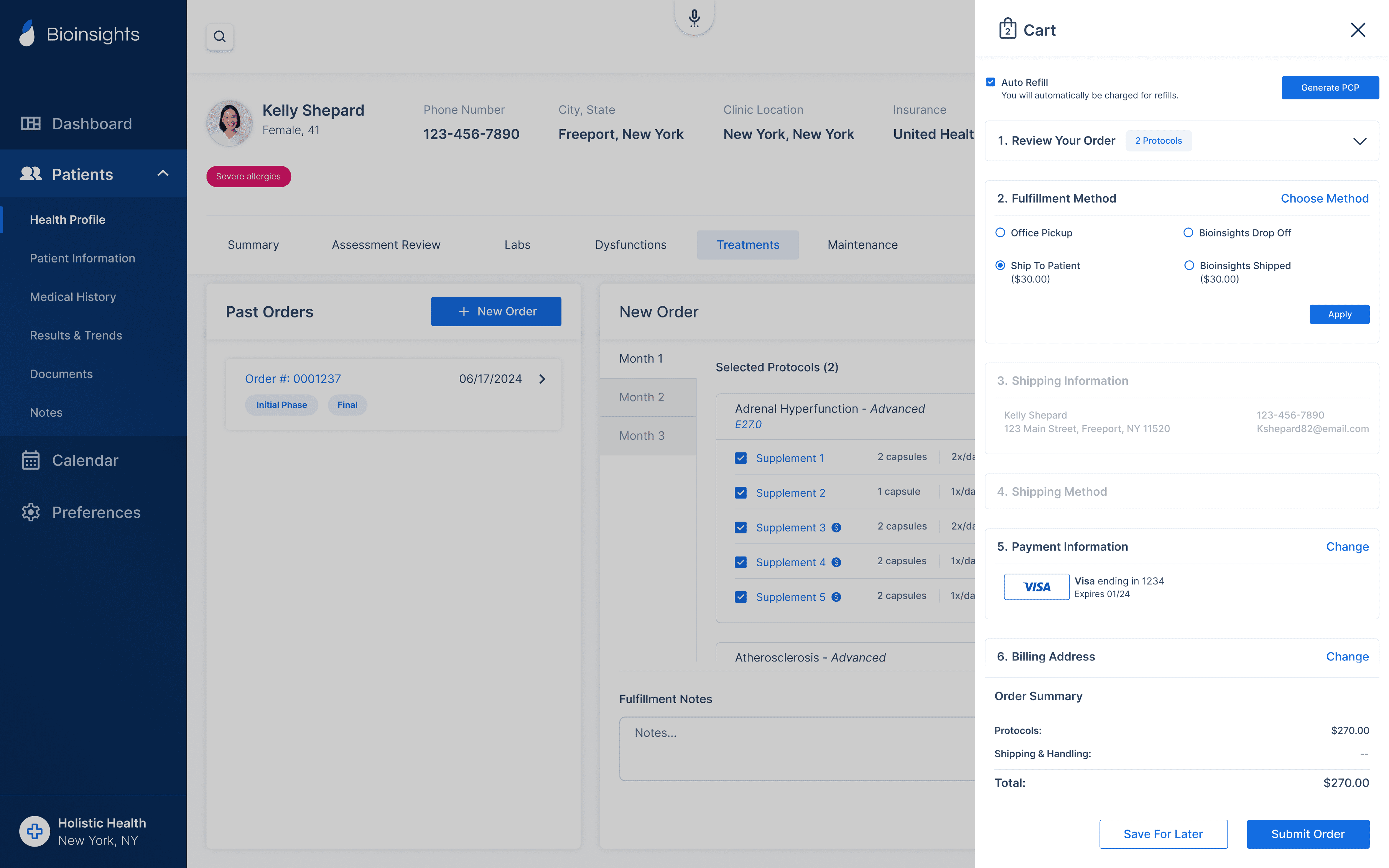
Fulfillment
Treatment packaging and delivery are managed in-house to reduce manual work. Tailored patient summaries and educational material are provided to patients to strengthen adherence, understanding, and collaboration between patient and provider.
Treatment packaging and delivery are managed in-house to reduce manual work. Tailored patient summaries and educational material are provided to patients to strengthen adherence, understanding, and collaboration between patient and provider.
Core Features
Core Features
Core Features
Integrated into the core workflow, our MVP platform included core features and tools that enhanced the user’s workflow, providing access to necessary actions that supported daily tasks and needs.
Core features include:
Integrated into the core workflow, our MVP platform included core features and tools that enhanced the user’s workflow, providing access to necessary actions that supported daily tasks and needs.
Core features include:
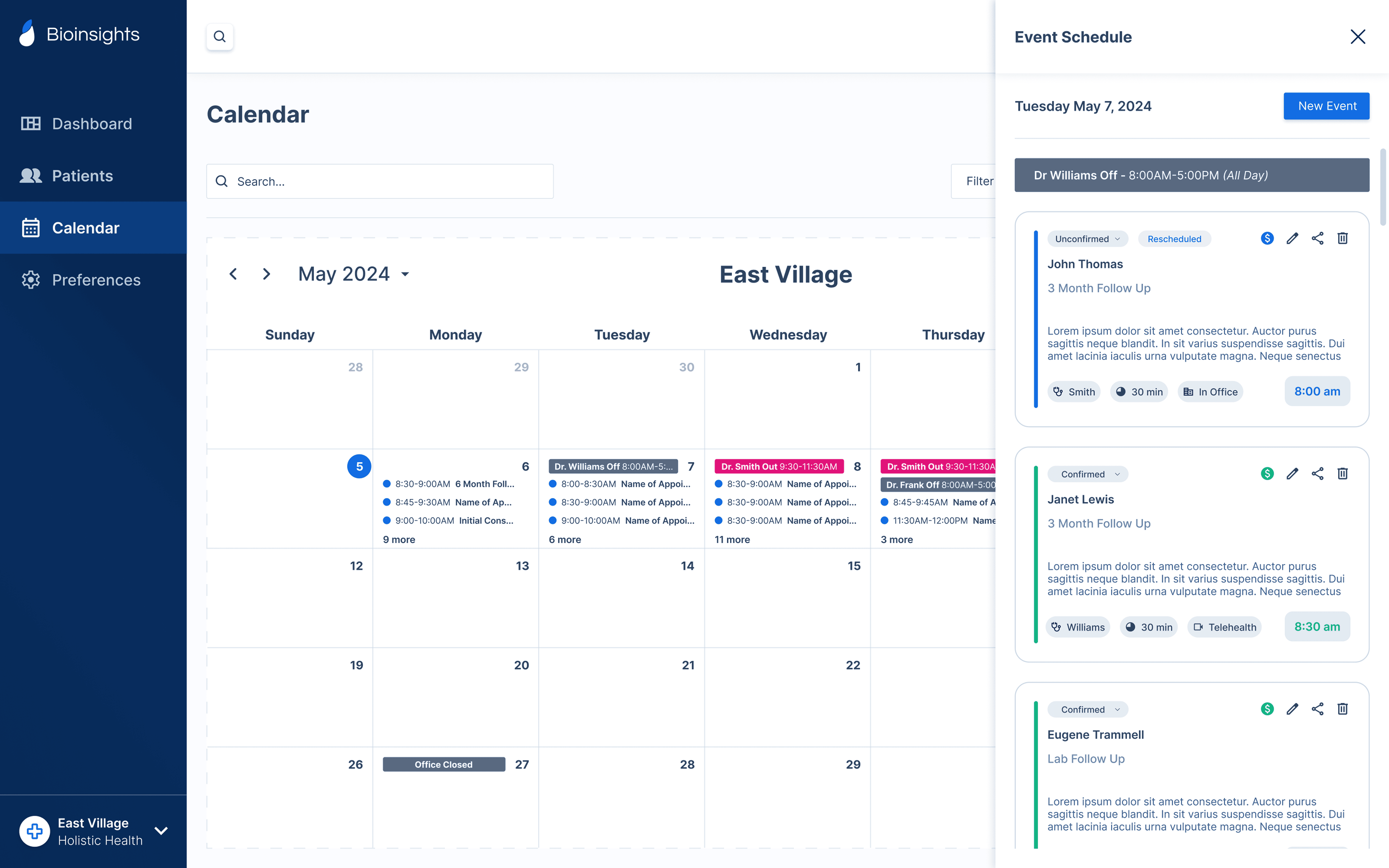
Calendar & Telehealth Access
Calendar & Telehealth Access
Access to a dedicated, in-platform virtual visit tool and a centralized appointment management and scheduling system, allowing full adaptability to a clinics’s needs.
Access to a dedicated, in-platform virtual visit tool and a centralized appointment management and scheduling system, allowing full adaptability to a clinics’s needs.
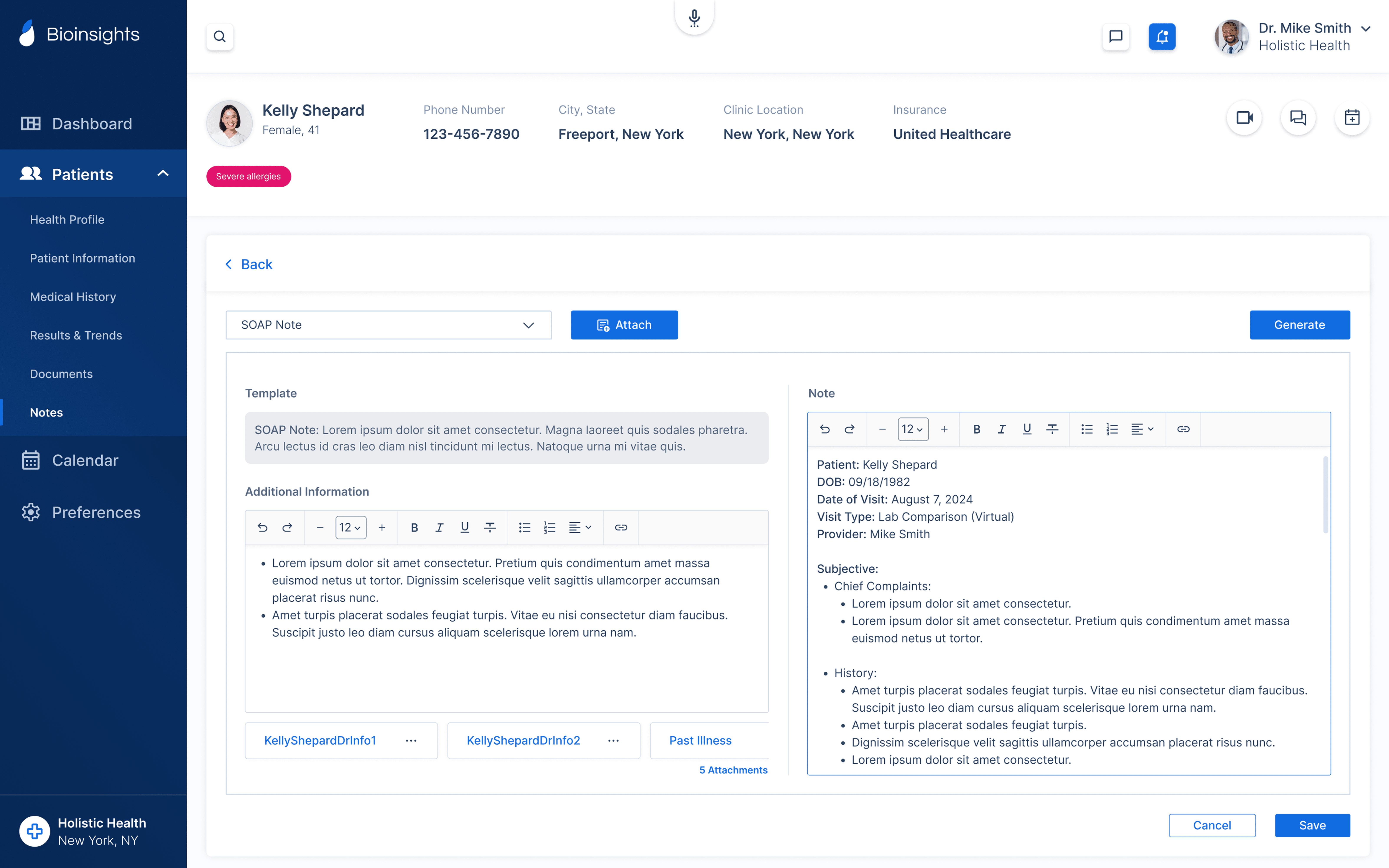
AI-Integrated Notes
AI-Integrated Notes
Template-driven clinical note auto-generation, with the ability to attach patient data and documentation. Reduces manual effort, while improving documentation accuracy.
Template-driven clinical note auto-generation, with the ability to attach patient data and documentation. Reduces manual effort, while improving documentation accuracy.
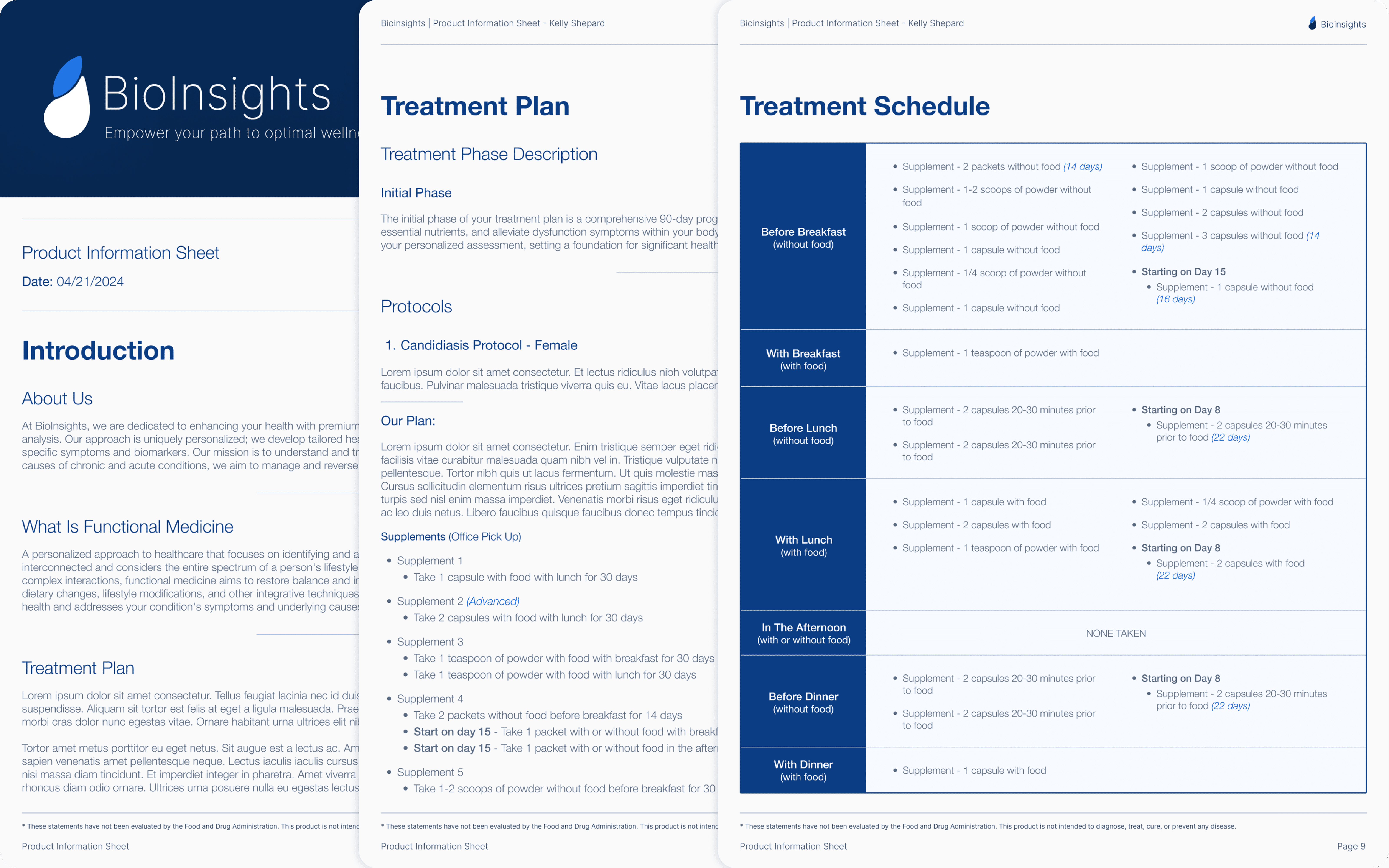
Auto Distribution of Material
Auto Distribution of Material
Distributed relevant educational material to patients at key moments throughout the core workflow, helping to provide the “why” behind provider decisions, improving patient adherence, and strengthening patient-provider trust.
Distributed relevant educational material to patients at key moments throughout the core workflow, helping to provide the “why” behind provider decisions, improving patient adherence, and strengthening patient-provider trust.
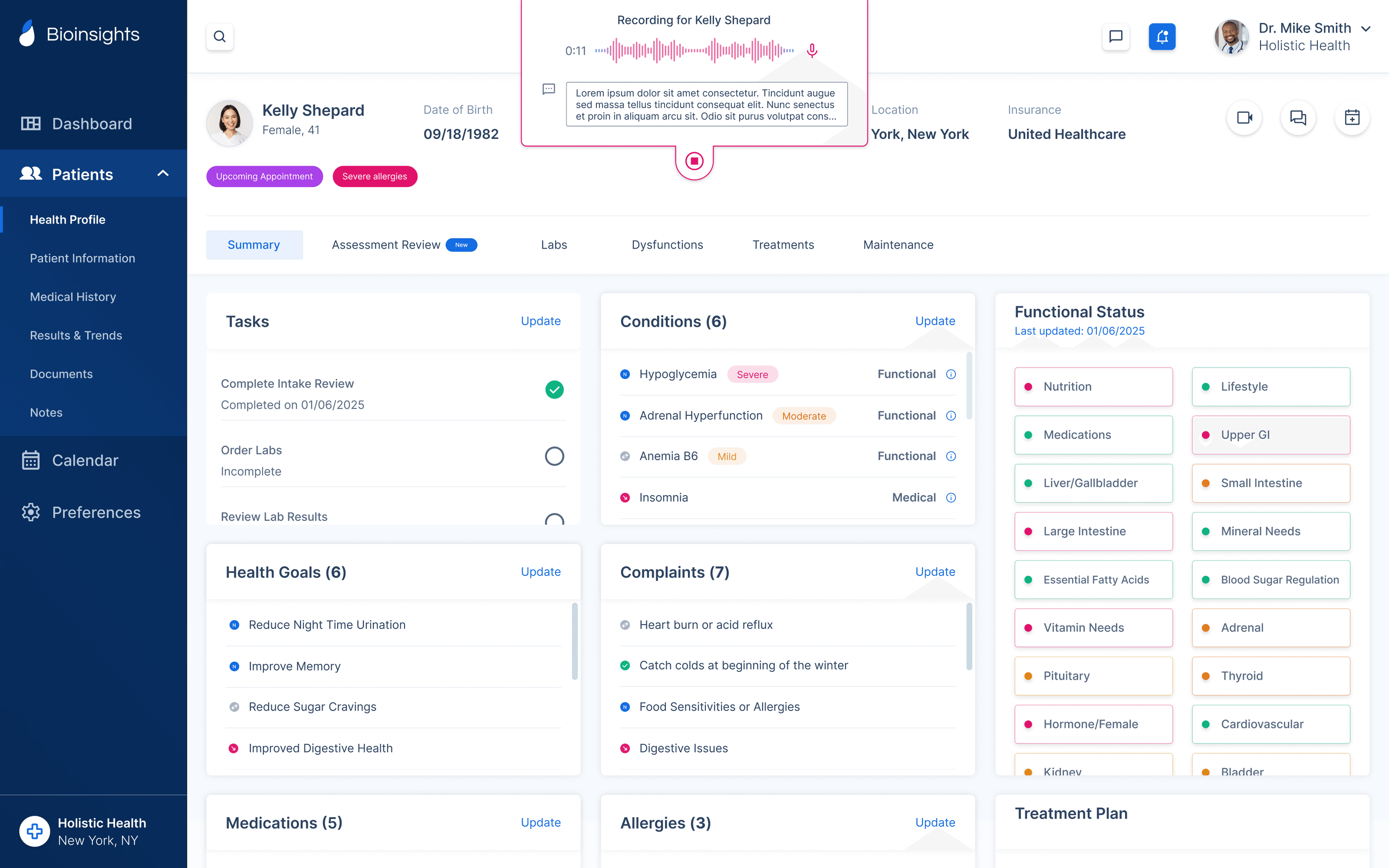
Audio Recording & Transcription
Audio Recording & Transcription
Ability to record and transcribe voice notes instantly, easily accessible within a patient’s profile. Enhances visit detail preservation accuracy, decreases manual note taking errors, and reduces documentation time.
Ability to record and transcribe voice notes instantly, easily accessible within a patient’s profile. Enhances visit detail preservation accuracy, decreases manual note taking errors, and reduces documentation time.
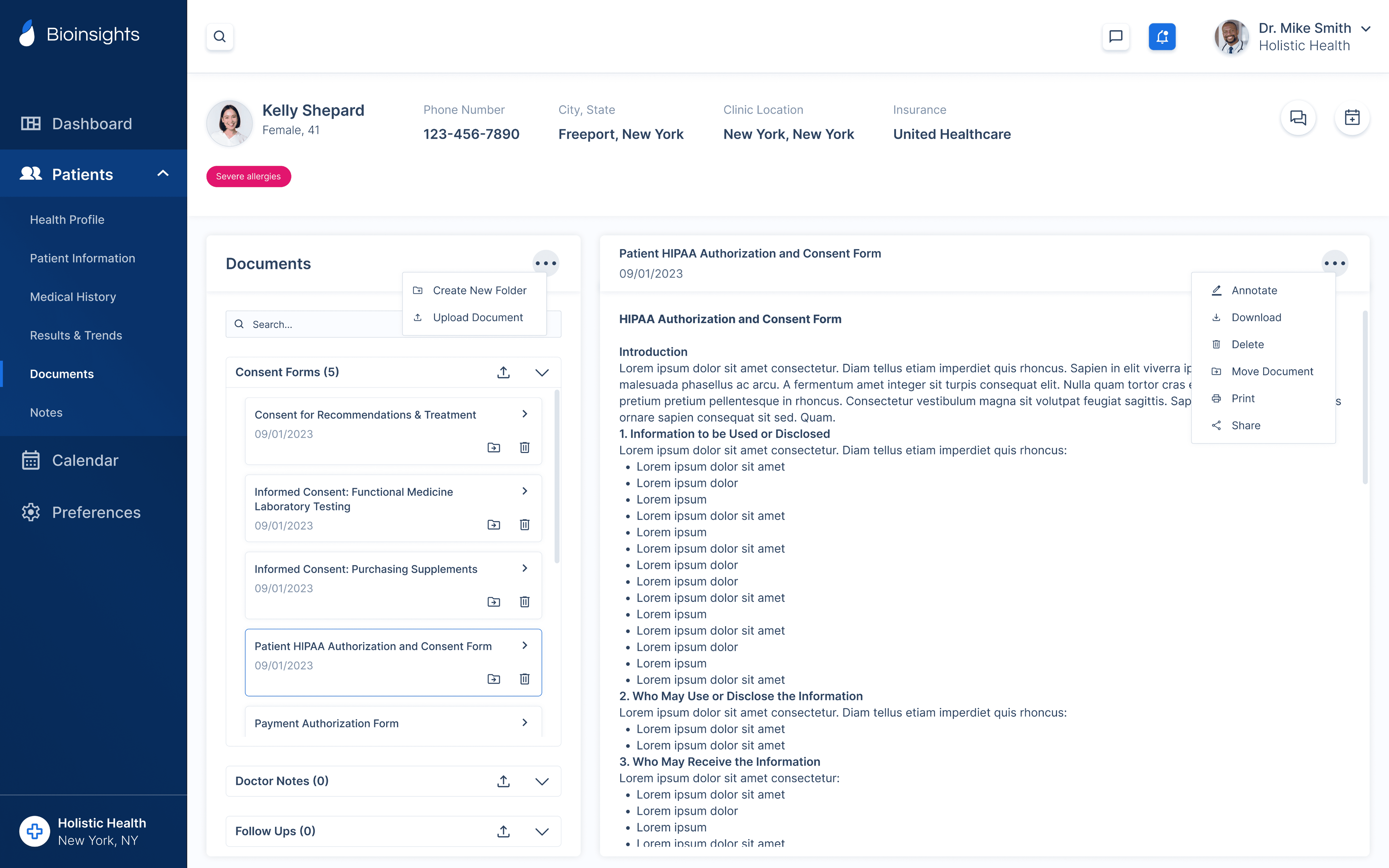
Document Management System
Document Management System
Introduced the ability to save patient documents and forms automatically to their profile. Allows for secure sharing, while reducing manual upload and download times.
Introduced the ability to save patient documents and forms automatically to their profile. Allows for secure sharing, while reducing manual upload and download times.

DEVELOPMENT & LAUNCH OF MVP
From Design To A Functional Product
From Design To A Functional Product
From Design To A Functional Product
Design To Development
Design To Development
Design To Development
During development of the MVP platform, I collaborated closely with engineering, project management, and clinical teams to ensure designs were translated effectively into a functional working product.
During development of the MVP platform, I collaborated closely with engineering, project management, and clinical teams to ensure designs were translated effectively into a functional working product.
My efforts included:
My efforts included:
My efforts included:
Supporting sprint planning and feature prioritization
Supporting sprint planning and feature prioritization
Defining user stories and detailed design requirements for engineering
Defining user stories and detailed design requirements for engineering
Working alongside engineers to answer questions and adapt designs when needed
Working alongside engineers to answer questions and adapt designs when needed
Supporting quality assurance (QA) efforts by testing and surfacing issues
Supporting quality assurance (QA) efforts by testing and surfacing issues
Creating in-depth documentation to support adoption and usability
Creating in-depth documentation to support adoption and usability
RESULTS
Delivered Meaningful Impact Across Care
Delivered Meaningful Impact Across Care
Delivered Meaningful Impact Across Care
Outcomes
Outcomes
Outcomes
Bioinsights replaces fragmented workflows with a unified system that reduces complexity and clinician frustration. By consolidating the tools and resources needed for patient care, the platform reduces average provider time per patient by an estimated 1 hour 23 minutes—reclaiming nearly 5 months of working time per year that can now be redirected toward patient care, quality outcomes, and clinic growth.
Bioinsights replaces fragmented workflows with a unified system that reduces complexity and clinician frustration. By consolidating the tools and resources needed for patient care, the platform reduces average provider time per patient by an estimated 1 hour 23 minutes—reclaiming nearly 5 months of working time per year that can now be redirected toward patient care, quality outcomes, and clinic growth.
The platform also lowers the barrier to functional medicine adoption, giving providers a clearer, data-backed foundation to make confident, personalized treatment decisions. With integrated clinical guidance and resources, and evidence-based protocols, clinicians reported sharper decision-making and stronger collaboration with their patients.
The platform also lowers the barrier to functional medicine adoption, giving providers a clearer, data-backed foundation to make confident, personalized treatment decisions. With integrated clinical guidance and resources, and evidence-based protocols, clinicians reported sharper decision-making and stronger collaboration with their patients.
Impact: More time for patients. More confidence in care decisions. A scalable foundation for functional medicine.
Impact: More time for patients. More confidence in care decisions. A scalable foundation for functional medicine.
Next Steps
Next Steps
Next Steps
Following the launch of the MVP platform, efforts shifted toward ensuring stabilization of the platform and supporting early adoption. Immediate focus was placed on identifying and resolving found issues within the live environment through feedback, while simultaneously assisting client onboarding through walkthroughs and demoing, ensuring they could confidently use the platform effectively.
Following the launch of the MVP platform, efforts shifted toward ensuring stabilization of the platform and supporting early adoption. Immediate focus was placed on identifying and resolving found issues within the live environment through feedback, while simultaneously assisting client onboarding through walkthroughs and demoing, ensuring they could confidently use the platform effectively.
Following the launch of the MVP platform, efforts shifted toward ensuring stabilization of the platform and supporting early adoption. Immediate focus was placed on identifying and resolving found issues within the live environment through feedback, while simultaneously assisting client onboarding through walkthroughs and demoing, ensuring they could confidently use the platform effectively.
Future Considerations
Future Considerations
Future Considerations
Beyond the MVP product, expanding the platform to include productivity tools, enhanced insights, and workflow management support would serve a meaningful purpose, providing additional value to users. Through increased feedback and monitoring user metrics, we could better identify persisting gaps and where opportunities existed.
Beyond the MVP product, expanding the platform to include productivity tools, enhanced insights, and workflow management support would serve a meaningful purpose, providing additional value to users. Through increased feedback and monitoring user metrics, we could better identify persisting gaps and where opportunities existed.
The goal would be to remove the need to use and rely on external tools altogether, offering a cohesive, unified platform.
The goal would be to remove the need to use and rely on external tools altogether, offering a cohesive, unified platform.
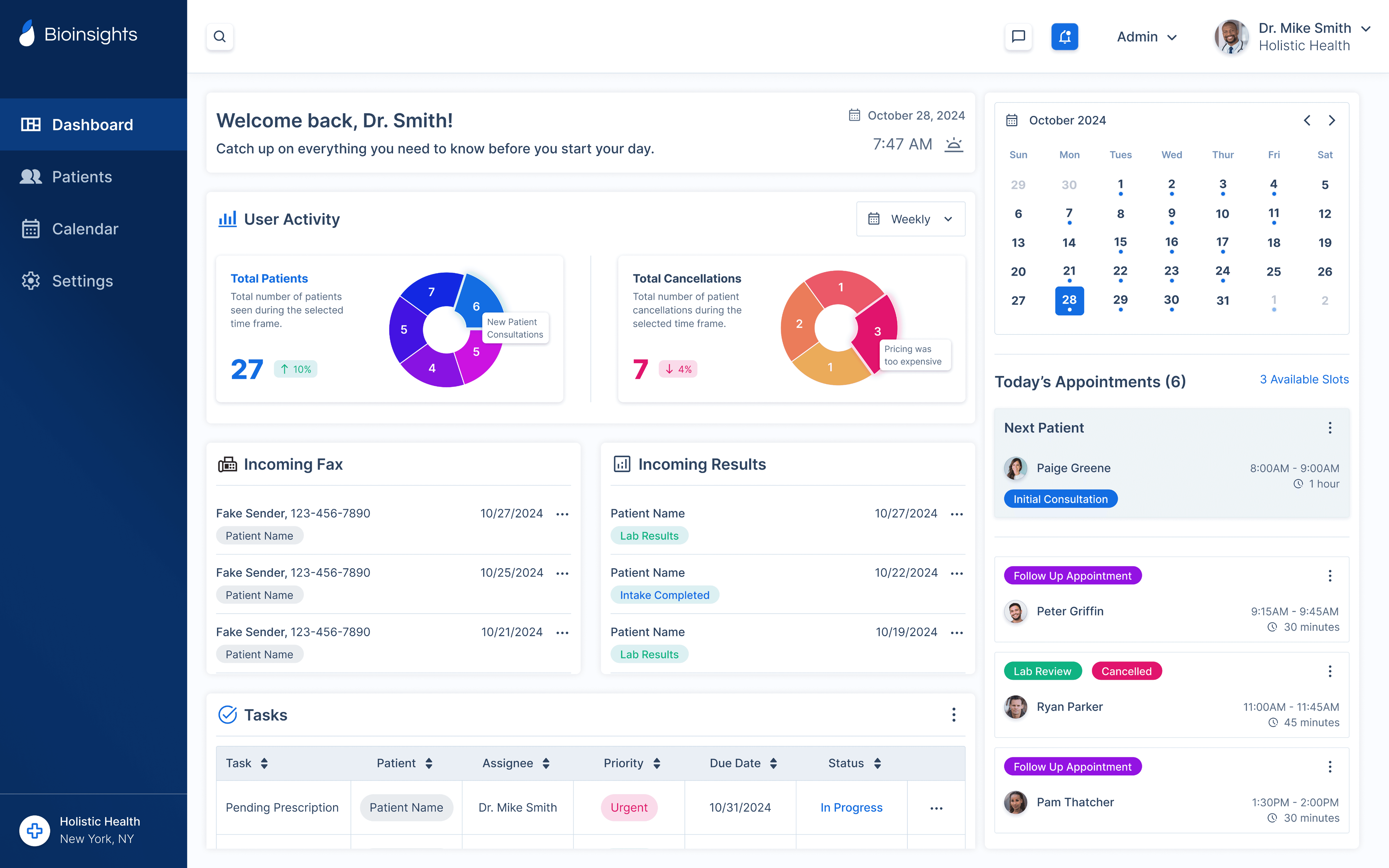
Provider Dashboard Concept
Provider Dashboard Concept
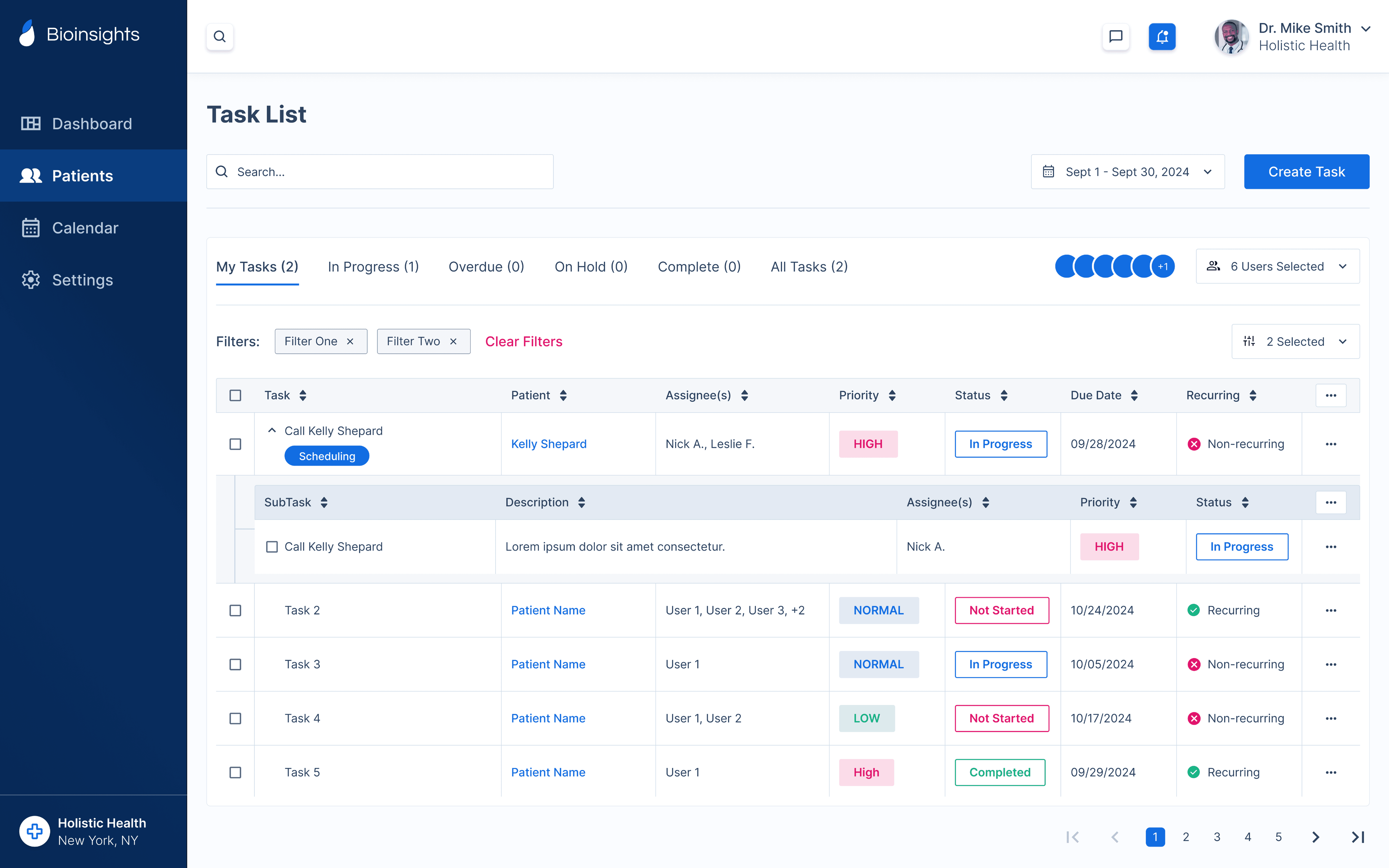
Task Management Concept
Task Management Concept
INTERESTED IN COLLABORATING OR LEARNING MORE?
Let's Connect!

INTERESTED IN COLLABORATING OR LEARNING MORE?
Let's Connect!
INTERESTED IN COLLABORATING OR LEARNING MORE?
Let's Connect!